
From the Deep Archives: COMMUNITY
a book excerpt in honor of Pride

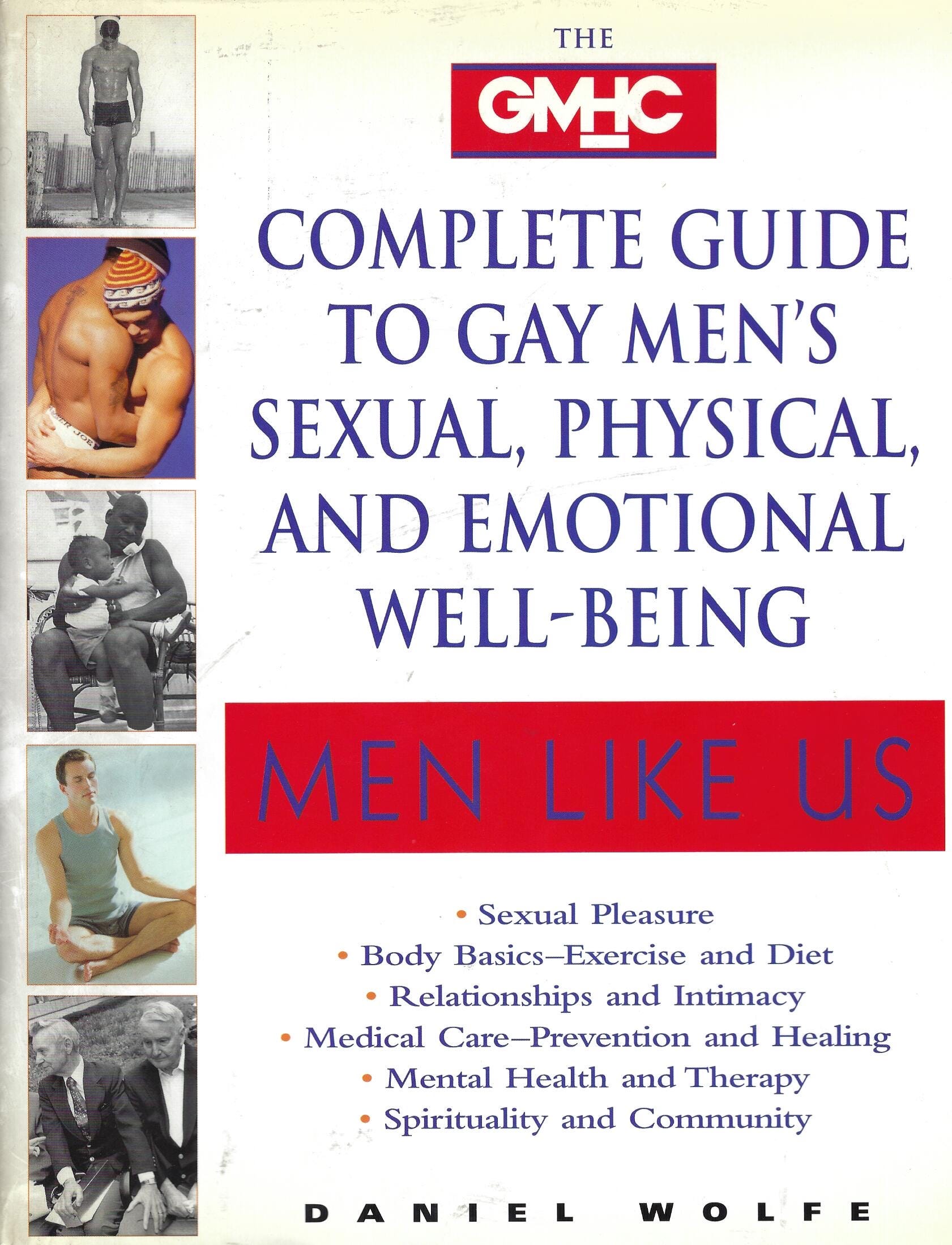
In 2000, Ballantine Books published Men Like Us: The GMHC Complete Guide to Gay Men’s Sexual, Physical, and Emotional Well-Being. Daniel Wolfe, the excellent writer and public health policy expert who edited the book, asked me to contribute to the final chapter, which focused on spirituality and community. We met through the overlapping worlds of gay activism (I was a volunteer and he was on staff with Gay Men’s Health Crisis) and downtown theater (his partner is/was performance artist and needle-exchange advocate Richard Elovich). I wrote most of the chapter, although Daniel had a hand in some of the prose and wove in bits and bobs from other contributors. Looking at it now, I can tell which sections are mine because they incorporate quotes from the friends of mine I called on for juicy reflection.
Contemplating the book from the perspective of today’s culture, Men Like Us can’t help feeling like a historical relic. Just in the 26 years since it was published, so much about our world has changed. These days, when the gender binary has been if not exploded then expanded to unforeseen dimensions, writing something specifically about “gay men” or “gay community” would be likely to arouse suspicion and certainly require careful contextualization. In the year 2000, AIDS was still central to most conversations about gay men’s health. Back then, “Eighth Avenue in Chelsea” had replaced Christopher Street as New York City’s equivalent to San Francisco’s Castro as the center of the gay world. The internet was just starting to bring everyone in the world online. 9/11 had not happened yet. Social media didn’t exist — imagine a world before Facebook/Instagram/Grindr/Scruff/TikTok/Twitter!
Everything must change/Nothing remains the same, as the pop ballad sung by Nina Simone (and many others) proclaimed. Does anything I wrote on the subject of community back then apply today? You tell me.
COMMUNITY
Where does the gay community begin and end? For all the talk of gay newspapers, gay institutions, this gay group or that one, the way gay men feel connected to each other is more complicated than who you march with on Gay Pride day or what magazines you get in the mail. Not that there’s even a single “group” to be part of. Trying to define gay community is a little like opening one of those Russian wooden boxes, finding one inside another, each feeling smaller and smaller until hardly anything fits. You may not be conscious of community at all until you bump up against the side of some pigeonhole or other. “I remember this man who came to an ACT UP meeting to beg us not to protest the high price of AIDS drugs,” says Joey, thirty-five, in New York. “He said that gay members of the Wall Street community would be put in a difficult position. And I remember I got stuck on this idea of the ‘Wall Street community.’ I mean, what is that?”
If you’re on Castro Street rather than Wall Street, or partying with a hundred thousand of your brothers and sisters during a march on Washington, you may still be hard pressed to figure out a way to knit together Gay Armenians Against Genocide, Accountants for a Change, Gay Men Clean and Sober, transgender S/M activists, and go-go boys in hula skirts. Boston-based writer Michael Bronski dismisses the idea of a single-minded or consolidated gay community as “so far from reality as to be, depending upon one’s frame of mind, either a myth or a joke.”
Myths, though, like all fantasies, enrich as well as disappoint. Thousands of gay and bisexual men stream to urban centers to look for a place where they, quietly or not, can feel part of a greater gay whole. The young wrestlers practicing in gay community centers are moving to put locks not just on each other but on that moment when they feel part of a team. The elderly Scrabble players in the room upstairs may be doing the same, piecing together a vocabulary to speak of themselves as united, on the same board. Some of the greatest political and personal achievements of gay men have been fueled by those moments when gay men and lesbians, bisexuals, transgendered people, and our straight allies have all been able to see ourselves as greater than the sum of our self-interests.
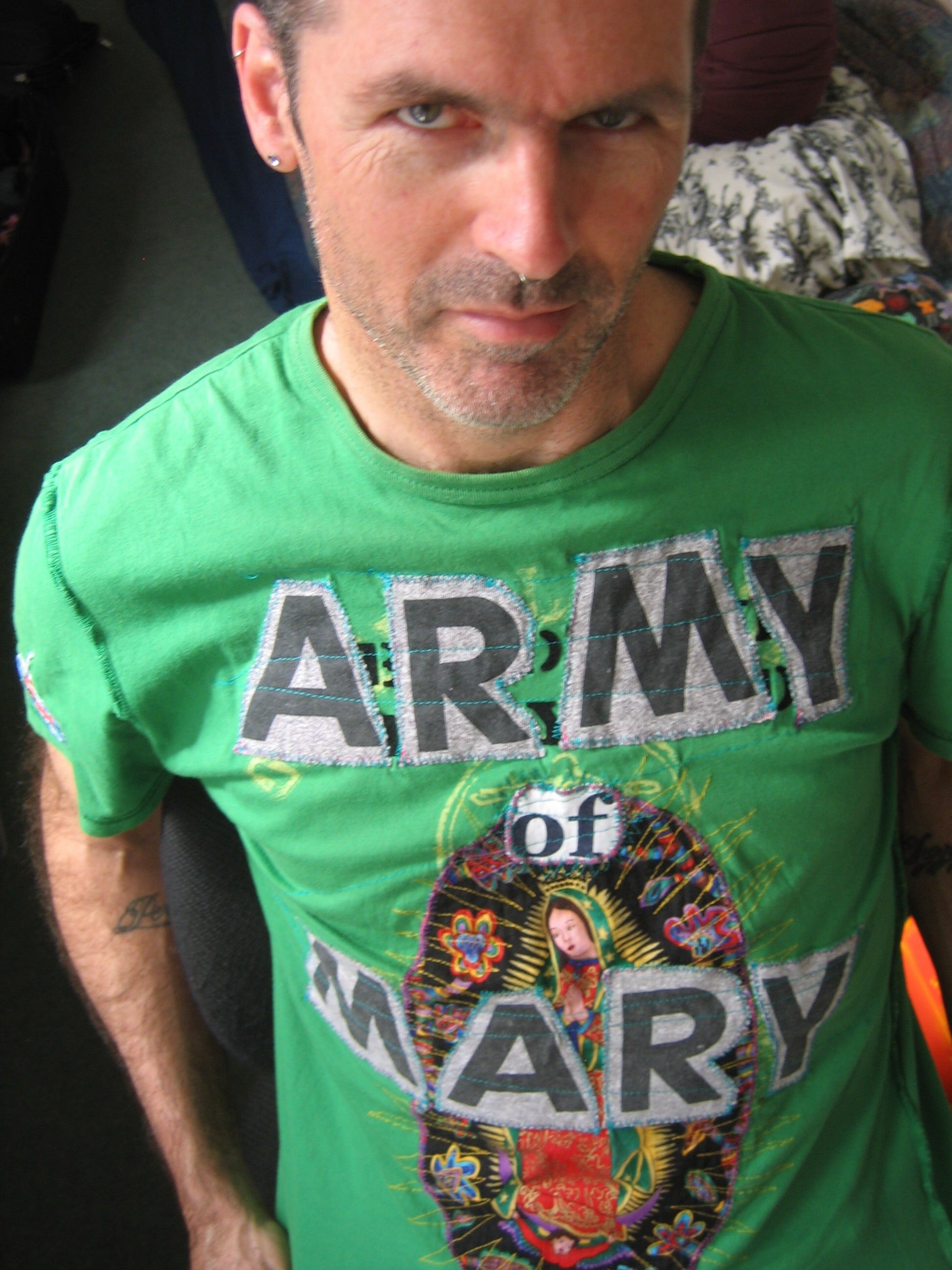
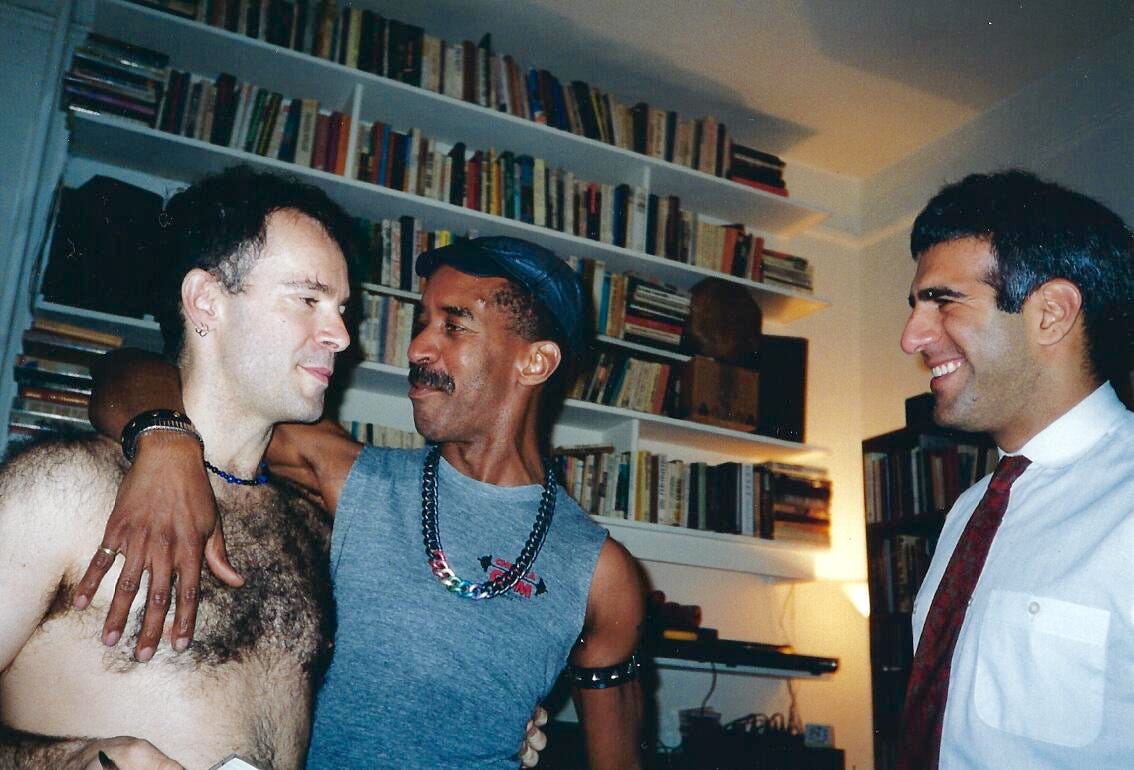
An awareness of collective being is one of community’s most precious dividends. Malidoma Some, writing in Ritual: Power, Healing, and Community (Viking Penguin 1997), describes what he calls “supportive presence,” the moment where “others in community become the reason that one feels the way one feels. The elder cannot be an elder if there is no community to make him an elder. The young boy cannot feel secure if there is no elder whose silent presence gives him hope in life.” If talk of children and elders seems uncomfortably people-of-the-village and not Village People enough for your taste, you might want to look at how you’re thinking about aging. Or you can adopt a more generation-free description. “I think a lot of community making is about falling in love with each other,” Keith (below), a San Francisco-based performer and activist, says. “Somehow, everything your community does interests you. You let their style rub off on you a little bit. You want to wear their clothes and copy their dance moves. Someone will tell me who they’re interested in sexually, and I’ll start to find that type sexy, too.”
Yearning for community gone by, or disappointment with the one we have, may be as common as feeling its embrace. “Sometimes I look at the local gay newspaper and see endless ads for beer busts, performances by drag queens, and phone sex, and I think, ‘Is this really what I came out for?’’’ says Don, forty-four. Watching reruns of Ellen at a bar – is that community? Bowling with a gay league one night a week – is that community? Dancing at a circuit party – is that community? The same Gay Pride march that can set you bubbling when you first move from South Dakota can seem as flat as old champagne ten years later. But not to worry. Having one foot in and one foot out, struggling to recommit, is part of most minority narratives.
TURNING A GAY GAZE ON THE GAY NEIGHBORHOOD
Ask gay men about their local gay neighborhoods, and their answers may vary depending on their age, weight, length of time they’ve spent there, or even their mood. “When I feel good, I look in the mirror and see a gay man with as much to offer as any Chelsea boy,” says John, twenty-five, whose youth may match the ideal of Chelsea 2000, but whose heavy frame (and heavy-framed glasses) doesn’t. “I love seeing people, hanging out in those cafes with all those incredible men, being part of the scene. But when I’m down, I just think, ‘Oh God, I’m another ugly old troll, and I don’t want to be seen in public!’ I mean, no way will I walk down Eighth Avenue when I’m feeling that way.”
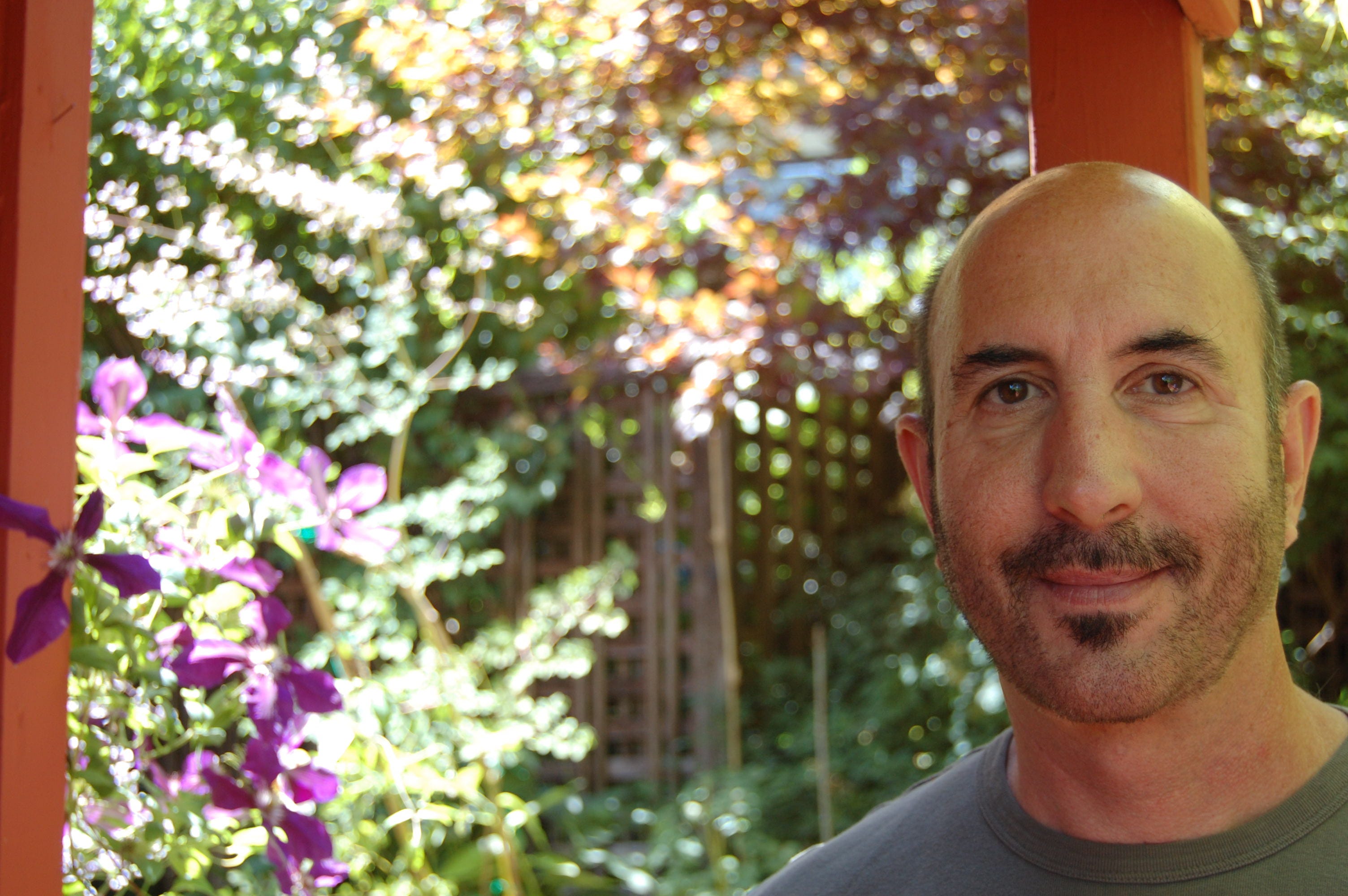
Gay people have often flocked to big cities to escape the loneliness, boredom, disapproval, or danger they experience in small towns and rural areas. If they re-create that small-town feeling in a gay urban neighborhood, at least it’s a small town where they feel welcome. “For me, there’s a sense of security and connectedness,” says Giuliano (below), fifty-one, a program manager for the San Francisco Department of Health, of life in the Castro, arguably the world’s most famous gay neighborhood. “I like the sweet little acknowledgements from the people I see all the time. We smile or wink or flirt with each other. And I appreciate having a gay doctor, a gay cardiologist, a gay barber, a gay garbage collector, and a gay cop (who is cute and will flirt) in the neighborhood.”
Outlaw writer and unrepentant queer William Burroughs, in Mark Thomson’s Gay Spirit, discerned a less sweet, but equally important, potential in gay neighborhoods: protection. Burroughs fantasized about the gay neighborhood as a kind of city-state, supported by gay gangs along the lines of Chinese tongs or a gay Mafia. “Greg arrives in a strange town and goes to his [gay] Tong,” he wrote of the gay state that never was. “He is immediately eligible for all the services and directed to a gay rooming house or hotel. He can get a job, medical and legal aid. He will be protected from violence by patrols operating around the clock. In the event of a blackmail attempt he can take his complaint to the protection department for legal advice.” Burroughs’s fantasy – of gay associations able to form a single voting bloc, bring down boycotts on businesses hostile to gay men, and protect their own – is one lived out in limited degrees by many men who take up residence in gay urban centers. “Living here makes it safe and easy to find sex, friends, fellow activists, and possibly lovers,” says twenty-nine-year-old Tony of his residence near the Hillcrest district of San Diego. “I suppose it also makes it easy to keep away from people different from myself. But at this point in my life I don’t mind much. After eleven years of HIV trauma, I’m rebuilding my understanding of gay male solidarity and finding there’s a lot to uncover.”
But when does gay sweetness begin to sour? When does the need for security become an excuse for ignoring people who remind you in any way of the world outside? What’s going on within or without, when a twenty-five-year-old describes himself as “an ugly old troll”? Mark Thompson is among those who see “gay ghettos” as part of our problems rather than part of the solution, a demonstration that “gay people can be as banal, myopic, and prejudiced as anyone else.” For him and others who wish we would do more “coming out inside,” the strength of being gay lies in using our awareness of difference to expand our options. Gay ghettos, goes the argument, are places where gay men open our wallets and flies more than we do our hearts, where we take pride without taking responsibility. “I think we should close them down,” says Stephen, who is fifty-four. “We’re only holding ourselves back. If we want to be accepted, we’ve got to stop acting like everything’s a sex party. Get outside. Move out. Move on.”
The term “coming out” originally was less about the closet you left behind than about the fabulous world you were coming into. Making that world into someplace where gay men, including fifty-four-year-old or non-White or non-buff or non-rich-and-stylish gay men, feel safe clearly doesn’t end with walking the dog down New York’s Eighth Avenue or tending garden in San Francisco’s “Swish Alps.” It might mean politics, or activism, or simply working to keep communication alive with people who aren’t part of your gay gang, however you define that. “I’ve been in Newsweek, local papers and am internationally, ‘media-cratically’ out,” says Dr. Elias Farajaje-Jones. “That doesn’t mean that when I go to the grocery store and the straight cashier asks me, ‘What does that T-shirt mean?’ that I can toss my head and give a pat answer. We need to talk.”
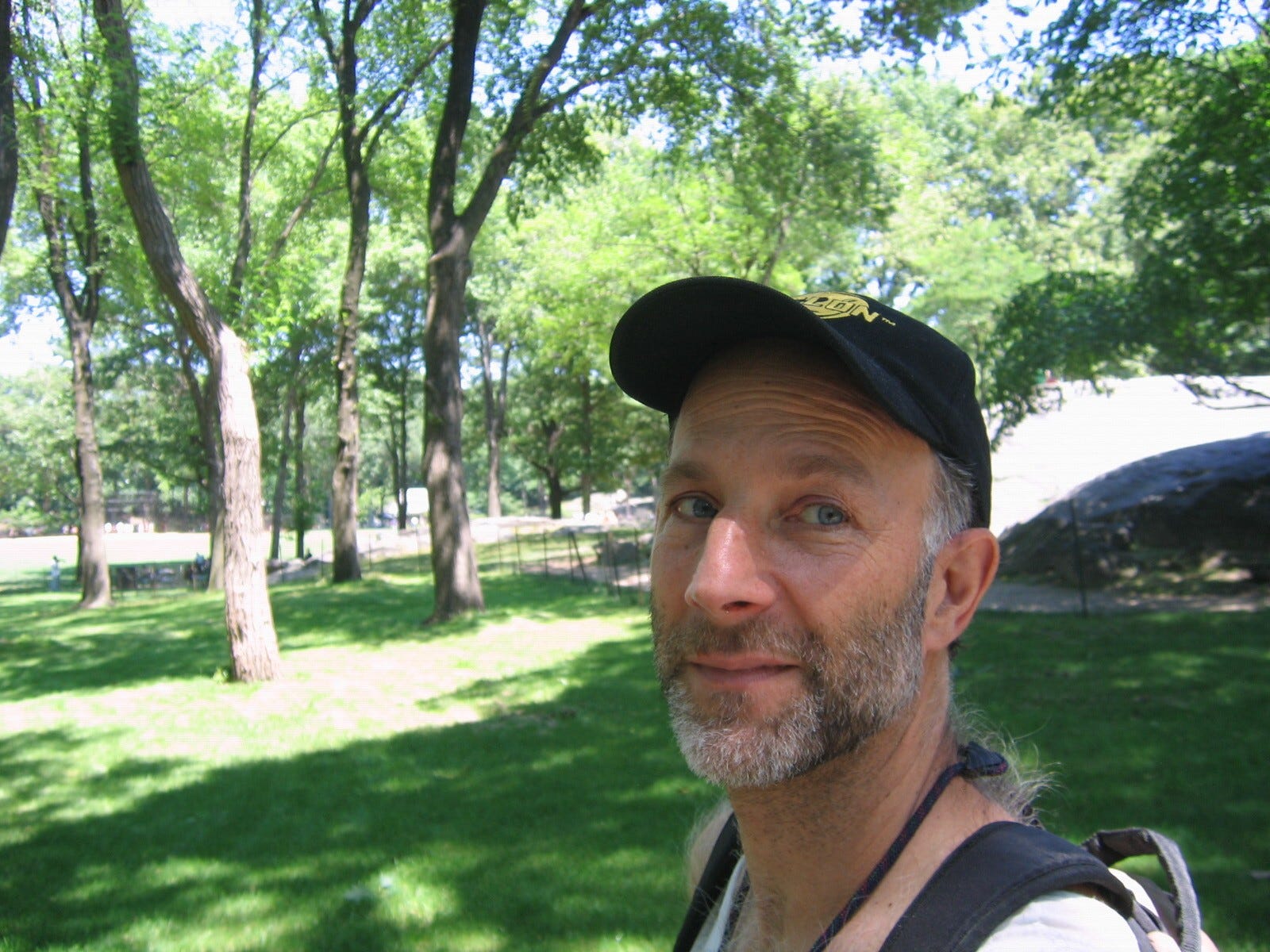
Exhortations to “shut gay neighborhoods down” or “get outside,” however, sound suspiciously like attempts to destroy someone else’s identity so that you can feel better about your own. Many gay men do choose to live among straight people and see that choice as political without feeling the need to lecture. “It’s great to visit Montreal or Boston or New York and feel the erotic energy of the city itself and of a concentrated gay population, but I always love coming home to what feels like a more rooted, more easily accessible, less stratified, and definitely less judgmental population of gay people,” says Stan, in Burlington, Vermont. “There are lots of potluck dinners and weekend volleyball picnics here, and almost to an obnoxious degree, people talk about their gardens, wood supply, and home building. But that’s true of everyone in Vermont.” Dee (below), a forty-six-year-old librarian who left “the counter-culture, folkie, food co-op crowd” of Cambridge, Massachusetts, for Champaign-Urbana, Illinois, found the change – and the fact that the one gay bar in town catered to men, women, leather folk, drag queens, and just about everyone else in the “LGBT” community” – refreshing. “College was so specialized, with a gay Jewish campus group, an older Black men’s group,” he says. “You never met other people.’ Especially women. “I love gay men,” agrees Harry, fifty-one, from Seattle. “But not enough to spend all my time with them. All-male environments, even when they’re gay, are scary.”
Is That All There Is? Five Ways to Break the Bar/Bathhouse Blues
We all know the tune. Men are pigs, the gay community has nothing to offer except snarky queens with attitude, and you wouldn’t consider going to a community center and sitting somewhere with all the rest of the losers with bad shoes and hair on their backs. But if West Hollywood makes you hateful or Chelsea makes you churlish – if bars and bathhouses seem both irresistible and totally unnourishing – perhaps it’s time to re-read the menu. Sure, doing volunteer work is cliché. But whining about the emptiness of sex or the snottiness of men you can’t seem to tear your eyes away from isn’t exactly breaking the mold. Besides, working for a change is hip. If Linda Evangelista and friends can form DISHES (Determined Involved Supermodels Helping to End Suffering), can’t you get up offa that thing, onto the runway, and into a new flight pattern? Here are five suggestions:
1 . Help another gay men or lesbian by volunteering your time at a local gay organization that you admire. Anti-violence projects all over the country need volunteers. Many churches and AIDS service organizations operate on volunteer energy. Offer whatever professional skills you have. If you’re a massage therapist, you might offer massages to homebound people with AIDS. If you’re an accountant, you might offer tax advice. If you’re a lawyer, you might assist people with wills and other legal documents. If you’re the president of your company, you might volunteer to walk someone’s dog.
2. Check out the nearest gay and lesbian center. Just looking over the list of groups that meet there may give you some ideas. The LGBT Community Center in Tallahassee has on its monthly calendar a writers’ group, a bowling league, a classic horror movie night potluck, a “polyamorous” chat group, and a gay outdoors group that goes tubing at Ichetucknee Springs.
3. Call your nearest gay switchboard and get a listing of every gay event next Friday night that’s not cruising. All over the country men are joining volleyball teams, reading groups, gardening clubs, and cooking classes. “For instance, there is a group of gay men that meets monthly to eat pasta and speak Italian to each other, mio amore,” says Giuliano in San Francisco. “There is a brand of the Sierra Club that is queer, and they organize hikes and other outdoor events. If you’re looking for community, I would advise you to join clubs, take classes, or hang out in a gay café. Of course, if you live in Omaha or Little Rock, I would advise you to move to San Francisco.”
4. Go online. Cyberspace is an invaluable resource, especially for people who live outside metropolitan areas. Dwight, a clock repairman in Hinton, West Virginia, considers the Internet a “fabulous tool.” It used to be that his only way to meet up with a guy was to drive forty miles to a gay bar. Thanks to a site called Rural Gay (www.ruralgay.com) he has joined a group called Mountain State Bears who have monthly meetings and plan camping trips together. Personal ads on such Web sites make it possible to meet other people for “alternative” holiday dinners or river-rafting trips. And of course, do-it-yourself sites are an oasis for guys who find body hair, a big belly, and being older than thirty-two better than Viagra for rousing the slumbering beast.
5. Push the envelope. If you don’t find what you need, start something yourself. After a television appearance on the Phil Donahue Show, Lidell Jackson got a phone call from a twenty-three-year-old Black gay man in Boise, Idaho. “He was struck by my saying on TV that my Blackness was as important to me as my gayness,” says Lidell. “I sent him some gay community publications from New York and information about Gay Men of African Descent. The following year he came up to me at the National Gay and Lesbian Task Force conference and introduced himself. He said he placed an ad in the local community newspaper saying, ‘I want to start a lesbian and gay group. Let’s meet at such-and-such a restaurant.’ Over twenty people showed up, and half of them came to the national conference.”
Nor is organizing the only way to take initiative. “You don’t have to have done X number of things in order to be able to say, ‘Okay, I’m an activist,’” says Dr. Farajaje-Jones. “Your work may be something like finally being able to talk about your male partner like he’s a ‘he’ instead of saying ‘they.’ That’s important.” Context is everything. “Here, gay activism is two men getting together and having dinner downtown,” says Michael in South Carolina.
As If
If you don’t feel you have an activist’s knowledge or conviction, use someone else’s. The late Vito Russo, author of The Celluloid Closet (HarperCollins, 1987) and champion of grass-roots politics, was on his deathbed when David Dinkins, then the mayor of New York City, paid him a call. Vito’s voice was reduced to a whisper – he could hardly breathe – but somehow he pulled himself together to offer a last exhortation to political action. “In 1776, Edmund Burke of the British Parliament said of the slavery clause, ‘A politician owes the people not only his industry, but his judgment,’” Vito intoned. “‘And if he sacrifices his judgment to their opinions, then he has betrayed them.’” Mayor Dinkins left impressed, and later, at Russo’s memorial, said he’d remember the moment for the rest of his life. Another speaker at the memorial was Vito’s friend Arnie Kantrowitz. “Vito loved that speech, too,” he said. “It was from the Broadway musical 1776.”
Vito Russo died of AIDS in 1992, having promised to kick the shit out of the epidemic and then to kick the shit out of the system that let things get this bad. His death was a huge loss, but not enough to dim the vital spirit of his promises. “The best way to cause a revolution is to live as openly as you possibly can in your own life,” he said in 1980, before we even knew what AIDS would do to him or to our ideas of gay community. “Do it openly so that other people can see that the sky doesn’t fall on you and try to affect their lives some way like that. Be open everywhere you go, and don’t let people force you into hiding. One of the things that disturbs me most is gay people who try to tell people, if you’re going to be openly gay in public, you better conform to the party line, you better say the things that the movement is saying, otherwise you’re betraying us. And that’s not true at all. A guy is not betraying anybody by being himself. In fact he’s helping the gay movement by being himself, because he’s showing the people that not every gay person is political, not every gay person is into the kind of things that people think they are – he’s breaking stereotypes in his own way. There are as many different kinds of gay people as there are different kinds of straight people.”
Viva Vito. Those are some last words we all can live with.
If you are enjoying these posts, please consider becoming a subscriber. All eyes are welcome, and I especially appreciate paid subscriptions. They don’t cost much — $5/month, $50/year — but they encourage me to continue sharing words and images that are meaningful to me. If it helps, think of a paid subscription as a tip jar: not mandatory but a show of appreciation.